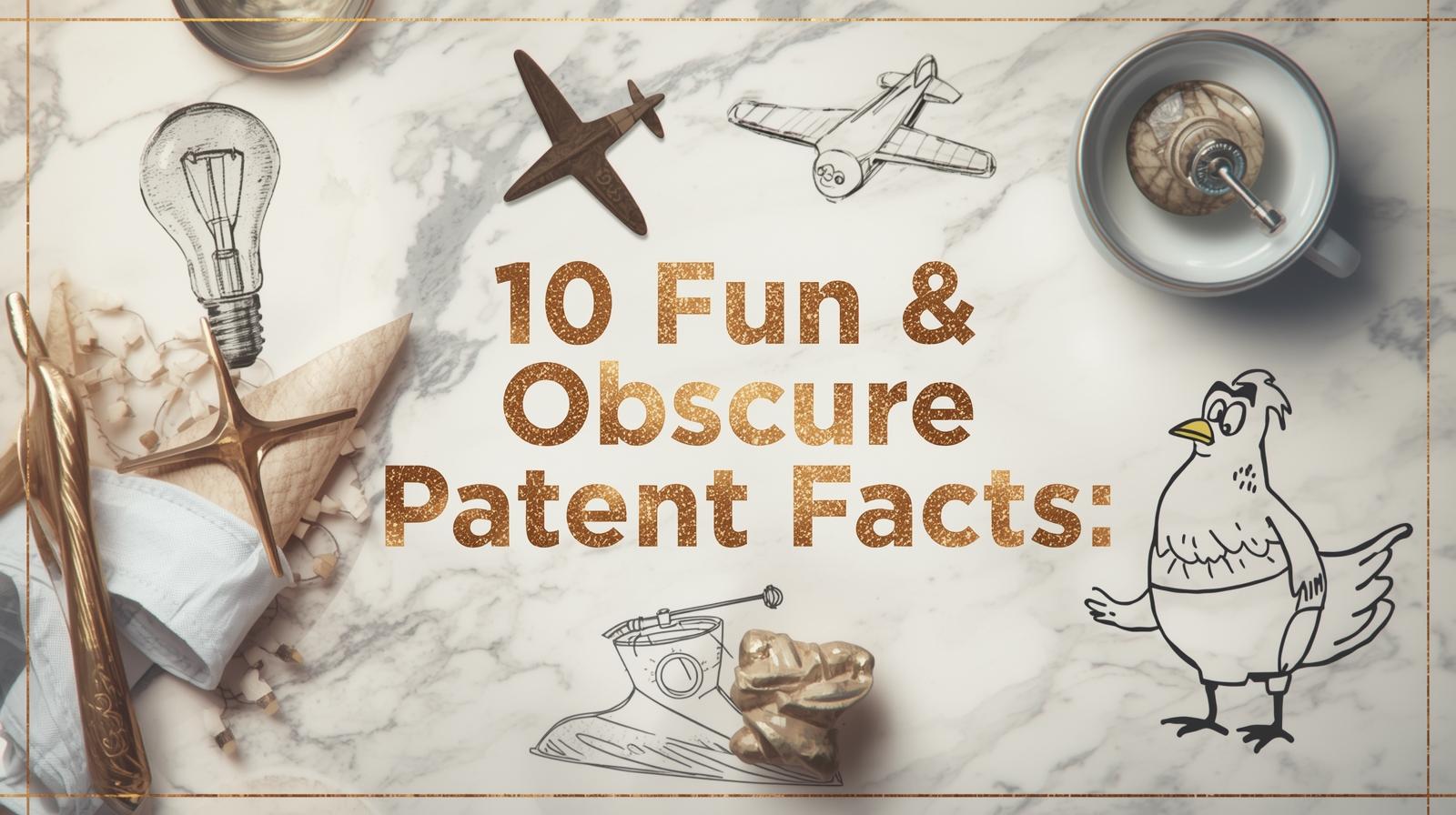
When most people think about patents, they imagine groundbreaking technologies like the light bulb, the telephone, or the airplane. But the patent world is full of surprises — some practical, some quirky, and some downright bizarre. Here are ten obscure (but fascinating) patent facts you probably didn’t know:
- The Very First U.S. Patent Was for Fertilizer
Patent No. 1, issued in 1790, went to Samuel Hopkins for a process of making potash, used in fertilizer. Not quite as glamorous as the iPhone, but essential for agriculture at the time.
- Abraham Lincoln Was a Patentee
Lincoln remains the only U.S. President to hold a patent — No. 6,469 for a device to lift boats over shoals. He never commercialized it, but it showed his inventive spirit.
- Patents Once Required a Miniature Model
From 1790 to 1880, inventors had to submit working models with their applications. Many of these tiny prototypes are now housed in the Smithsonian — a miniature history of innovation.
- Peanut Butter Was Patented (Sort Of)
Dr. John Harvey Kellogg (of corn flakes fame) patented a process for making peanut butter in 1898. He wasn’t the first to invent it, but he helped popularize it.
- The Wright Brothers Claimed Controlled Flight
Patent No. 821,393 (1906) broadly claimed their method of controlling flight, sparking legal battles with other aviators and companies.
- The Patent for the “Crustless PB&J”
In 1999, Smucker’s was granted U.S. Patent No. 6,004,596 for a sealed, crustless peanut butter and jelly sandwich (think Uncrustables). The patent described how to crimp and seal the bread edges to keep the filling inside. It caused quite a stir — some people argued that a sandwich was too obvious to patent!
- Michael Jackson Patented a Dance Move (Sort Of)
U.S. Patent No. 5,255,452 covered the “anti-gravity” shoe system he used to lean forward at impossible angles in Smooth Criminal.
- Edison Was a Patent Machine
Thomas Edison still holds the U.S. record for lifetime patents: 1,093. That’s almost a new invention every two weeks for 60 years.
- There is a patent for a bird diaper
Yes, really. In 1999, inventor Lisa Engler was granted U.S. Patent No. 5,934,226 for a “garment for pet birds” — essentially a bird diaper. The design allowed birds to fly around the house without leaving a mess behind. It even came with straps to keep it secure during flight!
- The patent for an anti-eating face mask
In 1982, U.S. Patent No. 4,344,424 was granted for an “Anti-Eating Face Mask.” The device strapped around a person’s head and physically blocked them from putting food in their mouth. It was marketed as a weight-loss aid — but thankfully, it never really caught on.
Why This Matters
Patents aren’t just about protecting ideas — they tell the story of human creativity, in all its useful, silly, and surprising forms. The next “weird” idea might just become tomorrow’s must-have product.
 Need help patenting your idea — whether it’s practical or a little outside the box? As a USPTO-registered patent agent with a decade of experience, I’d be happy to guide you through the process.
Contact us at admin@legacypatents.com to get started, or click the button below!
Before moving forward, it is also important to understand how timing factors can impact filings, including Will the Government Shutdown Delay Your Patent Filings?
Many inventors start with a provisional patent application to secure an early filing date while continuing development.
Are you ready to take the next step to protect your invention?
Contact us today for a free consultation and start the journey to secure your intellectual property. GET STARTED NOW Share the Post:Related Posts
The Truth About Invention Promotion Companies: Risks Every Inventor Should Understand
Thinking of working with an invention promotion company? Learn the major financial and legal risks inventors face, the red flags to watch for, and how to protect yourself before signing any agreement.
Read More
Do I Need a Prototype to Get a Patent?
Do you need a prototype to file a patent? This guide explains the real requirements for patent protection and what inventors should know before applying.
Read More